Christmas and New Year in Spain 2026
مشاركة
The Spanish holiday season is longer than most of Europe’s and it is shaped differently. It opens in the first week of December, around a pair of public holidays that together give the country a long weekend, and it does not close until the Three Kings arrive on 6 January. That is five weeks of lights, nativity scenes, holiday concerts and family meals.
في هذه الصفحة
إجابة سريعة
The emphasis also sits in different places. Christmas Eve, Nochebuena on 24 December, is the big family dinner rather than Christmas Day. New Year’s Eve, Nochevieja, is the country’s biggest night out. And 6 January, the Día de Reyes, is traditionally when children get their presents, with processions the evening before.
The listings below are the seasonal events we currently track across Spain, sorted by date. Programmes and opening hours for the holiday period are published by each city, so confirm before you plan around a specific day.
The Spanish holiday calendar
| Date | What it is | What happens |
|---|---|---|
| 6 December | Constitution Day (national public holiday) | With 8 December this forms the December puente, the long weekend that opens the season |
| 8 December | Immaculate Conception (national public holiday) | City lights and holiday markets are generally running by now |
| 22 December | The Christmas lottery draw | The Lotería de Navidad, broadcast live all morning, with the numbers sung by schoolchildren |
| 24 December | Nochebuena (Christmas Eve) | The big family dinner. Shops and restaurants close early; plan nothing for the evening |
| 25 December | Navidad (national public holiday) | A quiet day — almost everything is shut |
| 28 December | Día de los Santos Inocentes | Spain's day of practical jokes; even newspapers run hoaxes |
| 31 December | Nochevieja (New Year’s Eve) | Twelve grapes at midnight, then out until dawn |
| 1 January | Año Nuevo (national public holiday) | A very slow morning; New Year concerts later in the day |
| 5 January | Cabalgata de Reyes | Evening Three Kings processions through towns and cities across the country |
| 6 January | Día de Reyes (national public holiday) | Present day for many families, and roscón de reyes on every table |
Nochevieja and the twelve grapes
The Spanish New Year has one non-negotiable ritual: las doce uvas, twelve grapes, one eaten on each of the twelve chimes at midnight. It is harder than it sounds and being unable to keep up is part of the fun. Supermarkets sell tins of twelve peeled grapes in the last week of December for exactly this reason.
The chimes the whole country counts along to are broadcast from the clock on the Casa de Correos at Puerta del Sol in Madrid. Crowds gather in the square itself, which fills long before midnight and where access is normally controlled — check the city’s own guidance for the year before deciding to be there in person rather than in a bar.
Afterwards the night keeps going. Cotillón parties run until the early hours and clubs stay open far past their usual closing, and the traditional way to finish is chocolate con churros at first light on the way home.
Lights, belenes and regional traditions
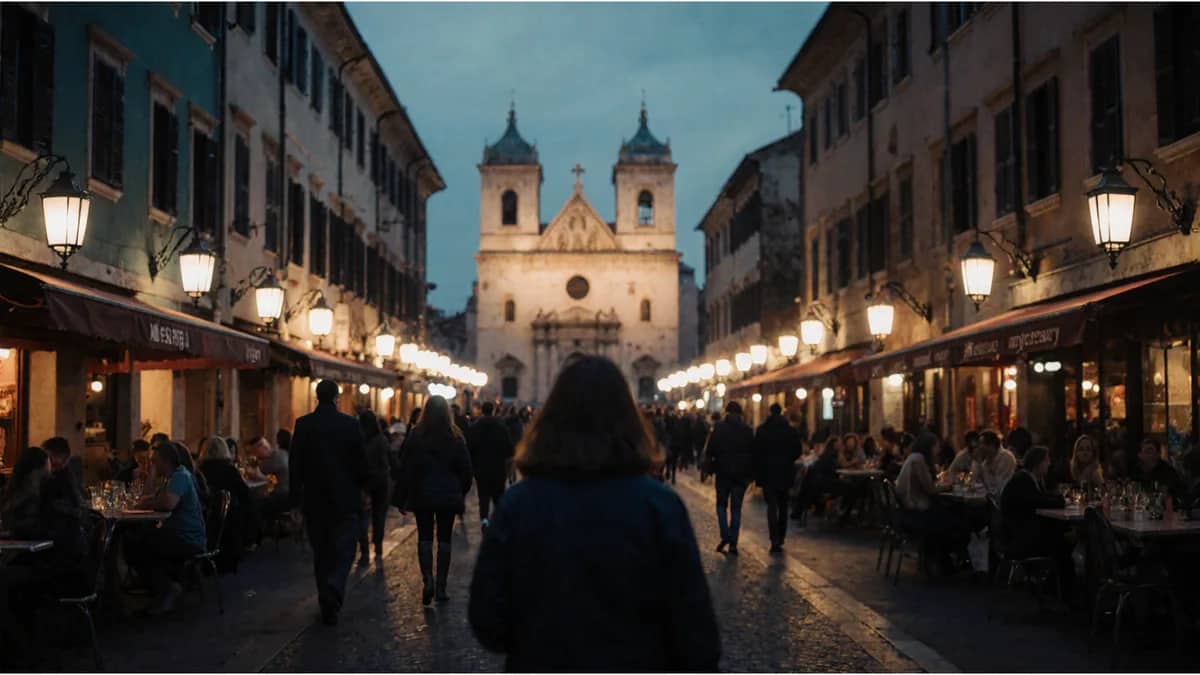
Every sizeable Spanish city switches on a large lights programme in late November or early December and keeps it running to 6 January. In the biggest cities the switch-on is itself an event, and the central streets get busy enough in the evenings that walking them becomes the activity.
The belén — the nativity scene — is the Spanish speciality. Churches, town halls, shops and private clubs all build them, some of them enormous, and in many towns there is an informal competition to see them all. Some places stage a belén viviente, a living nativity performed by residents.
Regional traditions add to it. In Catalonia children look after a Tió de Nadal, a small decorated log that produces presents, and nativity scenes hide a caganer figure somewhere in the background. In the Basque Country the gift-bringer is Olentzero, a charcoal burner who comes down from the hills. Across the country the Three Kings remain the traditional bringers of presents, though Papá Noel has been steadily gaining ground on 25 December.
What is open, and how to travel
- 25 December, 1 January and 6 January are national public holidays. Shops, most restaurants and many museums and attractions close outright.
- 24 and 31 December are ordinary working days, but everything winds down through the afternoon and the evening belongs to family dinners and parties.
- The busiest travel days of the Spanish year run 22–24 December and 4–6 January. Book long-distance trains and flights weeks ahead, not days.
- Museums and major sights publish reduced holiday hours in advance — check before building a day around one.
- Restaurants take bookings for Nochebuena and Nochevieja set menus a long way out, and many close entirely on 25 December.
- Public transport runs a reduced holiday timetable, though most cities extend or add services on the night of 31 December.
What people eat
- Turrón — almond nougat, either hard from Alicante or soft from Jijona — is the defining Christmas sweet and appears everywhere from early December.
- Polvorones and mantecados, crumbly almond shortbreads wrapped in twists of paper, come out alongside it.
- Seafood dominates the Nochebuena table in much of the country, which is why prawn and shellfish prices climb steeply in the second half of December.
- Cava, Spain’s traditional-method sparkling wine, is what gets poured for the grapes at midnight.
- Roscón de reyes, a ring-shaped sweet bread topped with candied fruit and usually filled with cream, is eaten on 6 January. There is a figurine hidden inside and a dried bean — find the bean and you buy next year’s.
FAQ
- When does the Christmas season start in Spain?
- Effectively in the first week of December, around the public holidays on 6 and 8 December. City lights are usually on by then and the season runs right through to 6 January.
- What happens at midnight on New Year’s Eve in Spain?
- Everyone eats twelve grapes, one on each chime of midnight, following the clock at Puerta del Sol in Madrid broadcast live nationwide. Parties then run until dawn, traditionally ending with chocolate con churros.
- When do Spanish children get their Christmas presents?
- Traditionally on 6 January, brought by the Three Kings, with processions — cabalgatas — through towns on the evening of 5 January. Presents on 25 December from Papá Noel have become common as well, so many families now do both.
- Is anything open on 25 December in Spain?
- Very little. It is a national public holiday and shops, most restaurants and many attractions close. Hotel restaurants and a small number of places in tourist districts are the exception, and they book up.
- What is a cabalgata?
- The Three Kings procession, held on the evening of 5 January in towns and cities all over Spain. Floats carry the Kings through the streets and sweets are thrown to the crowds. It is the most child-focused night of the Spanish year.
- Is Spain a good place to spend Christmas?
- It is if you want a long, sociable, street-level season rather than a single day indoors — five weeks of lights, nativity displays, holiday concerts and late nights, with milder weather than most of Europe, especially in the south.